
Demolition
Interior demolition
Cabinets, flooring, drywall, fixtures and non structural walls taken down, carried out and hauled off. The next trade walks into an empty room.
- Residential and commercial
- Non structural tear out
- Debris hauled off
- No dumpster in the lot
The work
Tear out and haul off are one job here
Most remodels stall in the same place. The demo crew finishes and leaves, and now there is a pile of cabinets, tile and drywall filling the room that the next trade needs. Somebody rents a dumpster. It sits in the driveway or the parking lot for a week. Somebody else loads it.
We do the tear out and the hauling on the same visit, off the same trailer. Cabinets come off the wall and go straight out. Flooring comes up and goes out. Drywall comes down and goes out. When we leave, the room is empty and the debris is gone with us.
That covers kitchens and bathrooms in a house, a whole first floor going down to studs before a remodel, and commercial spaces getting stripped for a new tenant.
Scope
What comes out
-
Kitchens
Upper and lower cabinets, countertops, backsplash, island, sink, disposal, range hood, soffits and the flooring underneath.
-
Bathrooms
Vanity, tub or shower surround, tile, toilet, mirrors, medicine cabinet, subfloor if it is soft, down to studs where that is the plan.
-
Flooring
Carpet and pad, tack strip, laminate, vinyl plank, glue down vinyl, ceramic and porcelain tile, thinset and hardwood.
-
Walls and ceilings
Drywall, plaster, paneling, wallpaper backing, drop ceiling grid and tile, and non structural partition walls.
-
Trim and built ins
Base, casing, crown, chair rail, closet systems, shelving, bookcases, wall units and rubber wall base.
-
Commercial interiors
Retail and office finish outs, cubicle systems, counters, partition glass, signage, break rooms and back of house.
The line we do not cross
Nothing structural
Load bearing walls, headers, beams, columns, roof structure and foundation work are not interior demolition. Those need an engineer, a plan and a licensed contractor to carry the load. If nobody has told you which of your walls is load bearing, that is the question to answer before demolition day, not during it.
Real job
Commercial interior, Austin
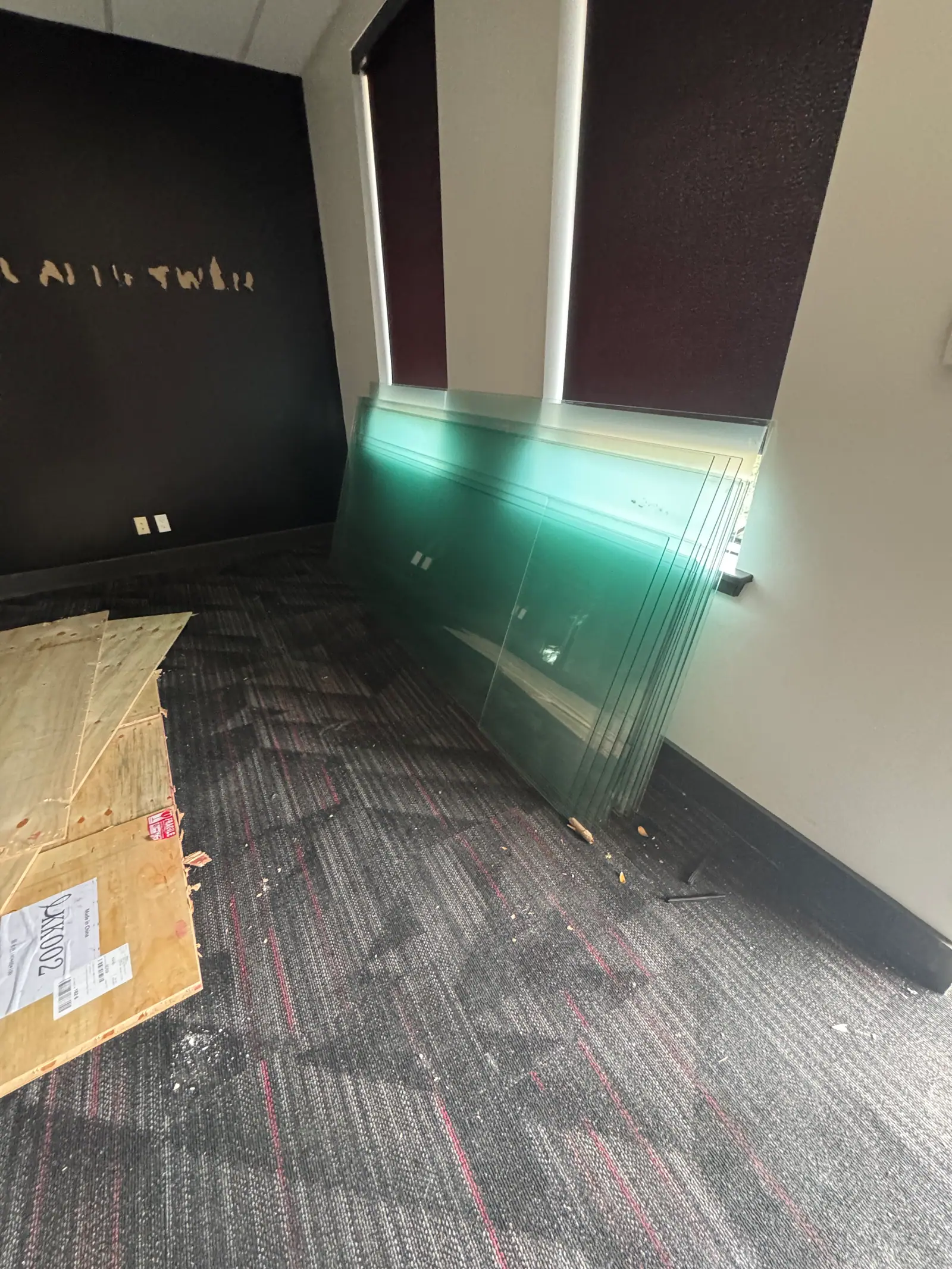
April 2026, GPS tagged in Travis County. A commercial space stripped out mid renovation, and the debris load that came off it.
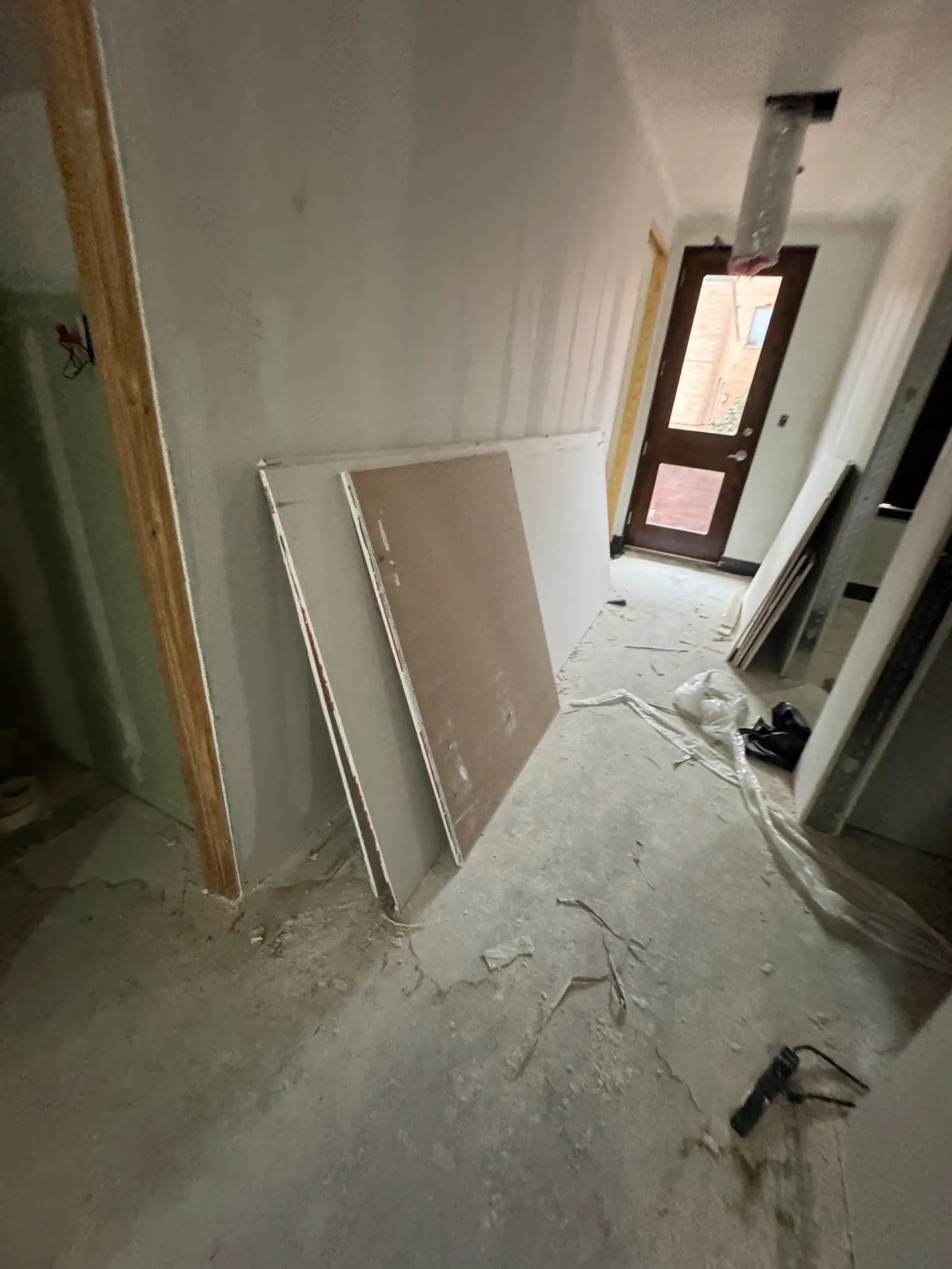
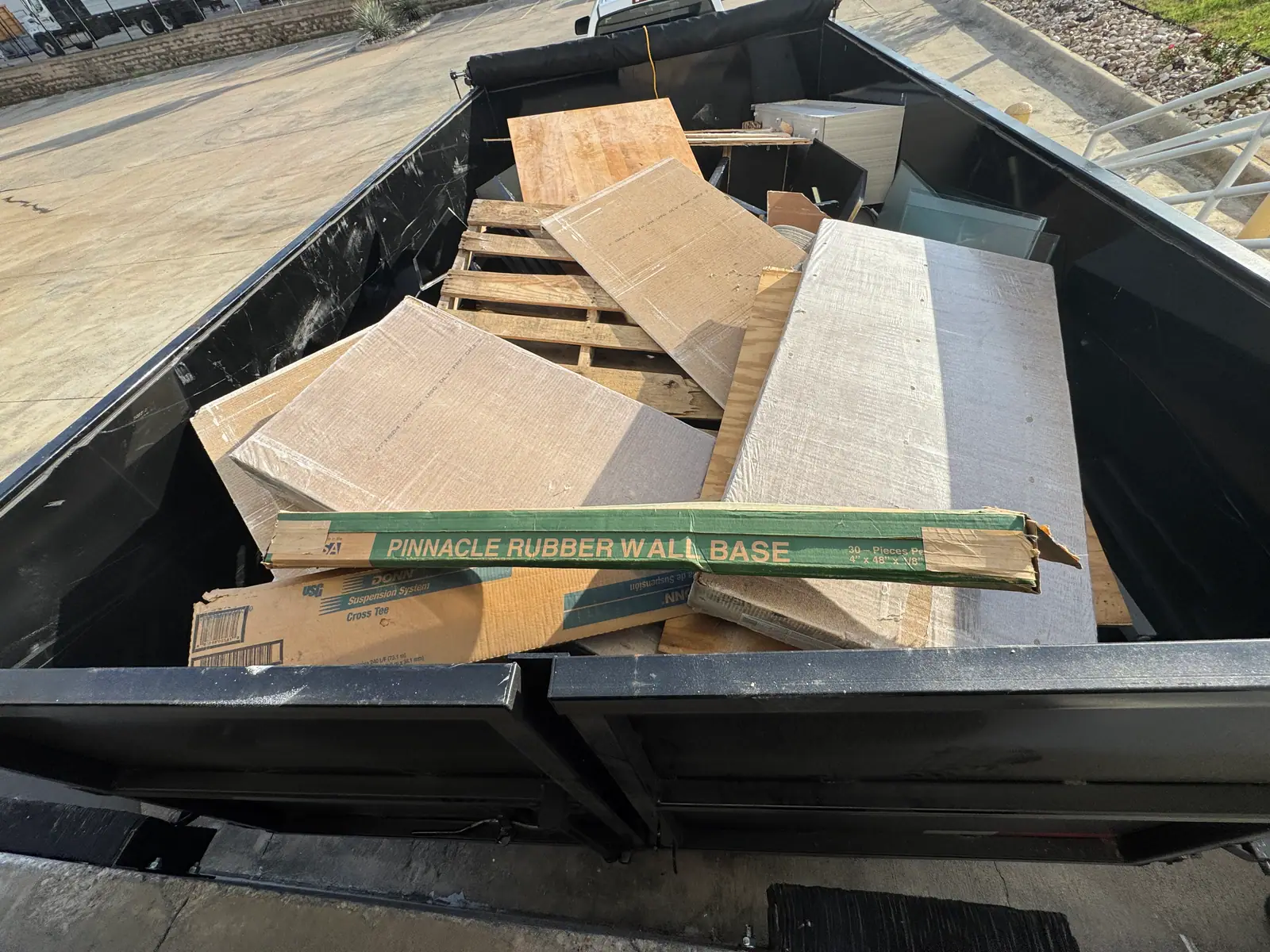
Large glass partition panels leaned against the wall, drywall sheets stacked on bare concrete, and the trailer loaded with cardboard, rubber wall base and plywood on the way out. This one is logged as construction debris removal with interior demolition on the same job, which is how these usually come in: part tear out, part haul off, on a working jobsite.
See the full job, construction debris removal or what we do in Austin.
Before we start
Utilities, testing and permits
Interior demolition has more that has to happen before day one than any other job on our list. None of it is optional.
Utilities dead first
Circuits off at the panel and labeled. Water off at the fixture or the main. Gas capped by a licensed plumber. HVAC and vents accounted for. Nothing gets cut into a wall until we know what is behind it.
Asbestos and lead
Texas requires an asbestos survey before renovation or demolition of public and commercial buildings. Popcorn ceilings, nine inch tile, black mastic and old duct wrap are common hits. Pre 1978 houses can have lead paint. We do not test and we do not abate. Licensed abatement goes first.
Permits and building rules
The remodel permit belongs to the owner or the general contractor. Commercial buildings often add their own rules on freight elevator hours, loading dock access and after hours work. Get those in writing before the schedule is set.
Tell us on the phone
- What is coming out and what has to stay untouched
- What the floor is and what is under it
- Which floor it is on and whether there is an elevator or a dock
- Whether the building is occupied and what the working hours are
- When the next trade is scheduled to start
Pricing
What changes the price
Square footage
A single kitchen and a whole floor going to studs are different orders of work and debris.
Layers
Carpet pulls fast. Glue down vinyl and thinset tile over concrete are slow, dusty and heavy. Two floors stacked on each other is two removals.
Weight
Disposal is charged by weight. Tile, plaster, mortar and countertops fill a trailer by weight long before they fill it by volume.
Access and hours
Ground floor with the trailer at the door is the easy case. Stairs, an elevator, a shared dock or after hours work in an occupied building all add time.
Send photos of every room that is coming out, and say what has to stay clean. That is most of the estimate.
Related work
What usually goes with it
Interior work rarely ends at the walls.
-
Construction Debris Removal
Drywall, lumber, shingles, tile, concrete and jobsite trash cleared so the next trade can work.
-
Junk Removal
We load it, haul it and sweep the spot clean. Single items or a full trailer, house or jobsite.
-
Deck Removal and Demolition
Boards, framing, posts and footings torn out and hauled. Yard left clear.
-
Estate Cleanout
A full house cleared after a move, a sale or a death in the family. We work at your pace.
Service area
Where we do interior tear out
Based in San Marcos, working about 35 miles out. Austin and San Antonio are both in range.
Interior demolition questions
Do you haul the debris or do I need a dumpster?
Do you take out load bearing walls?
What about asbestos and lead paint?
Who shuts off the power, water and gas?
Do you work for general contractors?
Do I need a permit for an interior remodel?
How is interior demolition priced?
Get the space stripped
Kitchen, bathroom, whole floor or a commercial suite. Tell us what is coming out and when the next trade starts.
Elite Demo and Junk Removal. San Marcos, Texas, 35 mile radius.